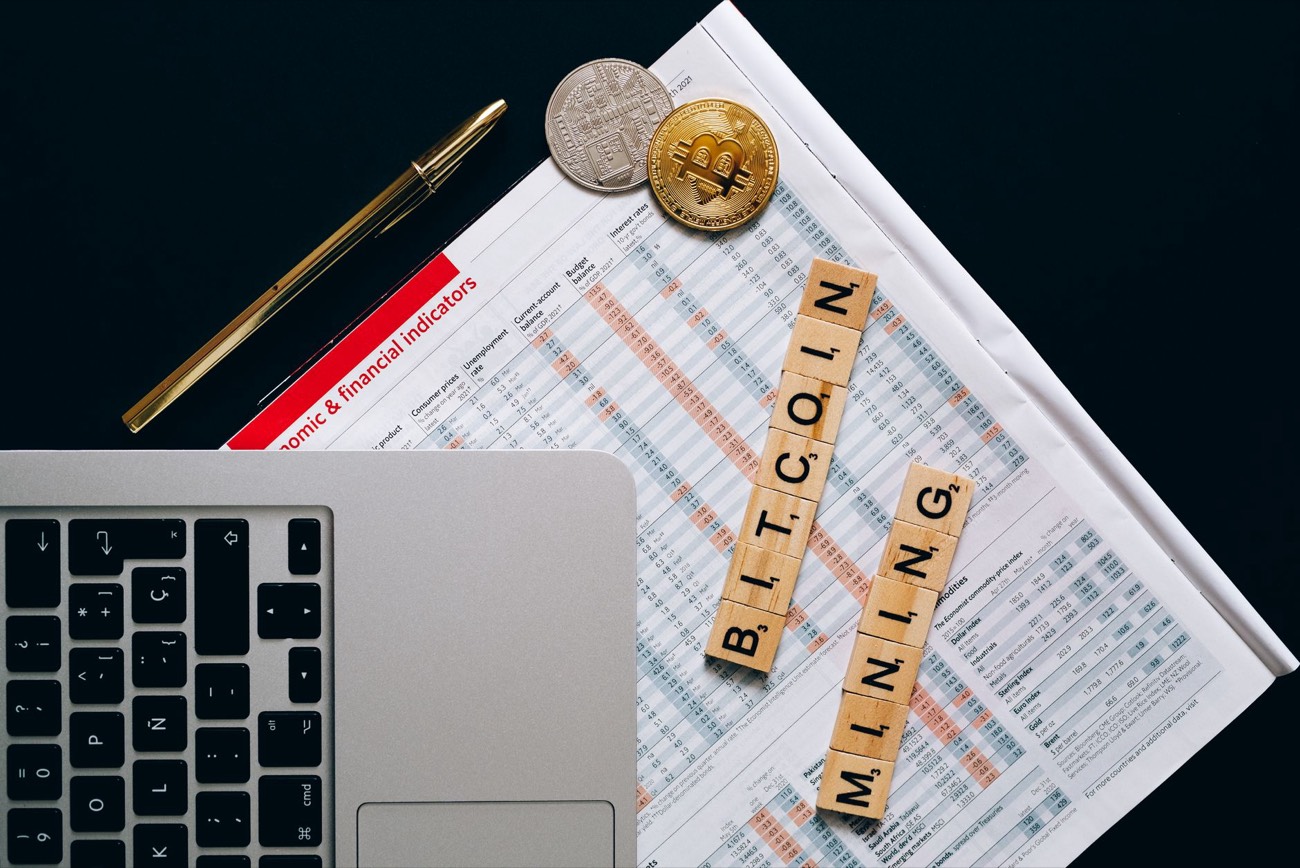
Crypto mining is the process where computers compete to solve a hard math puzzle in order to add new transactions to a blockchain and earn newly created coins. It is how certain cryptocurrencies, most famously Bitcoin, confirm payments and release new coins into circulation without any central authority. Miners run powerful machines that make trillions of guesses per second; the first to find a valid answer gets to add the next “block” of transactions and collects a reward. This article explains how that works, why it uses energy, and what beginners should realistically expect. It is general education, not financial advice.
What mining actually does
To understand mining, it helps to remember what a blockchain is: a shared public ledger of transactions, maintained by many computers rather than one company. The hard problem is agreeing on which transactions are valid when no one is in charge. Mining is one solution to that problem. It does three jobs at once:
- Confirms transactions. Miners bundle pending transactions into a block and verify they follow the rules (no spending coins you do not have, no double-spending).
- Secures the network. Adding a block requires real computational work, which makes rewriting history extremely expensive.
- Issues new coins. The miner who adds a block receives newly created coins, which is how supply enters circulation in a controlled way.
So mining is not “making coins out of thin air.” It is a competition to do useful bookkeeping, with new coins as the prize for doing it honestly.
How mining works, step by step
The system most people mean by “mining” is called proof of work. Here is the simplified cycle:
- Transactions gather in a waiting area called the mempool.
- Miners assemble a candidate block of transactions they want to confirm.
- They race to find a special number (a “nonce”) that, combined with the block, produces a result below a target set by the network. There is no shortcut; it takes enormous trial and error.
- The first to find a valid answer wins, broadcasts the block, and the rest of the network checks it.
- The block is added to the chain and the winner receives the block reward plus the transaction fees inside it.
- Difficulty adjusts so that blocks keep arriving at a roughly steady pace even as more or fewer miners join.
Because finding the answer is hard but checking it is easy, everyone can quickly agree the winner did the work. That is the clever trick behind proof of work.
Why mining uses so much energy
The energy use is not an accident or inefficiency to be fixed; it is the point. The security of a proof of work network comes from the fact that competing for blocks costs real electricity. To attack the network, someone would need more computing power than everyone else combined, which would cost an impractical amount of energy and money. So the energy spent is the price of security without a central authority.
That design has real environmental and cost consequences, which is one reason many newer networks chose a different approach. The main alternatives:
| Consensus method | How it secures the network | Energy use | Example networks |
|---|---|---|---|
| Proof of work | Miners spend computing power to compete | High | Bitcoin |
| Proof of stake | Validators lock up coins as a deposit | Low | Ethereum (since 2022) |
| Other models | Varies (delegated, authority, etc.) | Usually low | Various smaller networks |
Under proof of stake, participants called validators put up (or “stake”) their own coins as collateral instead of burning electricity. If they cheat, they can lose that stake. It reaches a similar goal — honest agreement — with a fraction of the energy.
Can you mine crypto at home?
Many beginners ask whether they can mine coins on their laptop or gaming PC. The honest answer for major coins is: not profitably. Bitcoin mining is now dominated by industrial operations using specialized machines called ASICs, running in warehouses near cheap electricity. A home computer cannot compete with that, and the electricity cost would exceed anything earned.
A few realities worth knowing:
- Specialized hardware wins. For Bitcoin, general-purpose computers stopped being competitive years ago.
- Electricity is the deciding cost. Profit is roughly the value of coins earned minus the power bill. Where electricity is expensive, mining rarely pays.
- Smaller coins are mineable but marginal. Some newer or smaller coins can still be mined on regular hardware, but earnings tend to be small and unpredictable.
- Profitability swings constantly. It depends on coin price, network difficulty, fees, and energy costs, all of which change. Be skeptical of any site promising steady mining income.
If a service promises guaranteed mining profits or asks you to pay upfront for a “cloud mining” contract, treat it with caution — these are a known scam category. See common crypto scams.
The bottom line
Crypto mining is the engine that lets proof of work networks like Bitcoin confirm transactions and issue coins without a central authority. Its energy use is deliberate: it is what makes the network hard to attack. For beginners, the practical takeaways are that home mining of major coins is generally not worth it, and that mining is only one way blockchains reach agreement — many now use lower-energy proof of stake instead. To build your foundation, read what is cryptocurrency and what is Bitcoin. Understanding the mechanics helps you spot exaggerated claims and make sense of the headlines.